
Safety & Compliance
Safety isn’t a department.
It’s how we operate.
Every fuel we deliver, every tank we install, every driver on the road, safety is built into how we work, not added on afterward.
Our commitment
Safety across every fuel, every customer, every day.
From residential propane to commercial diesel, from farm DEF to lubricants, how we handle every product, every delivery, and every installation is governed by the same core principle: keep people and property safe.
CETP
Certified Employee Training for every propane technician on every install and inspection
DOT
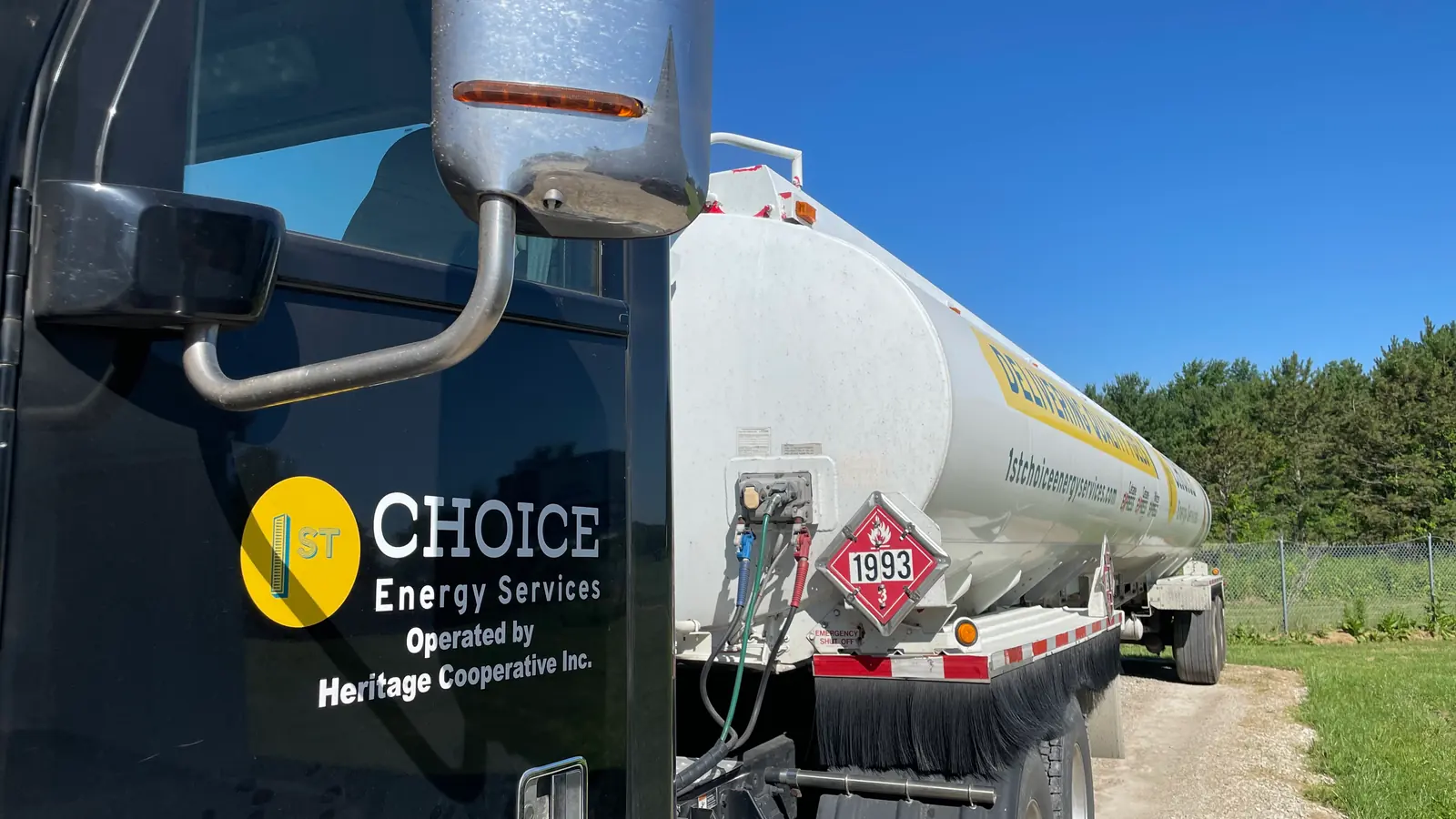
Hazmat-trained, CDL-licensed drivers on every fuel delivery route we run
NFPA 58
Every tank installation meets the LP Gas Code from setback to pressure test
24/7
Ohio-based emergency dispatch around the clock, every day of the year
Emergency procedures
What to do in a fuel emergency
In any fuel emergency the first step is always the same: get people out first, call for help second. Our 24/7 line is 800.227.1062.
If You Smell Propane
- 01 Get everyone away from the smell and make no sparks: no switches, phones, engines or flames nearby.
- 02 Close the tank valve (clockwise) only if you can safely reach it outside.
- 03 From a safe distance, call us first at 800.227.1062. If you can’t reach us, or anyone is in danger, call 911.
If You Smell Heating Oil
- 01 Open windows and doors to ventilate if it is safe to do so.
- 02 Turn off the burner at the emergency switch (usually red, near the furnace).
- 03 Do not restart the system. Have a licensed heating contractor inspect the burner. For your tank or a delivery, call us: 800.227.1062.
If Your CO Alarm Sounds
- 01 Get everyone outside immediately. Do not stop to investigate.
- 02 Call 911 from outside. Leave doors open as you exit to help ventilate.
- 03 Do not re-enter until cleared by emergency responders and our technician.
Diesel, DEF, or Oil Spill
- 01 Stop the fuel source if it is safe to do so.
- 02 Keep all ignition sources away. Use absorbent material to contain the spill.
- 03 Call us: 800.227.1062. For large spills, also call Ohio EPA: 800.282.9378.
Certified, Trained People
Safety starts with the people doing the work. Our service technicians operate to CETP (Certified Employee Training Program) standards, the recognized propane industry benchmark for competency and safety knowledge. Every delivery driver is DOT hazmat trained and holds a valid CDL, with ongoing refresher requirements that keep credentials current.
- Propane service technicians trained to CETP standards on every install, service call, and inspection
- Delivery drivers complete DOT hazmat training and hold valid CDL credentials before operating any of our vehicles
- Ongoing mandatory safety training for all field and delivery personnel, not just at hire
- Operations management trained in spill response, SPCC compliance, and regulatory reporting
Code-Compliant Installations
Every tank we install, residential, agricultural, or commercial, is set to NFPA 58 (Liquefied Petroleum Gas Code) standards. That means correct setbacks from structures and ignition sources, proper anchoring, pressure and leak testing before the system goes live, and cathodic protection where required on underground tanks.
- NFPA 58 setback and installation requirements on every propane tank we place
- Pressure test and leak check performed before any new system is commissioned
- Cathodic protection installed on underground tanks to prevent corrosion
- Permits pulled and local fire marshal requirements coordinated as applicable
- Post-install walkthrough with every customer covering shutoffs, regulator location, and emergency procedures
Protected Storage & Spill Prevention
Our bulk storage facilities operate under EPA SPCC (Spill Prevention, Control, and Countermeasure) plans. Secondary containment is in place at our regional facilities to prevent any release from reaching soil or water. The same philosophy applies to on-farm and on-site bulk storage we recommend to customers.
- SPCC plans on file at our regional bulk storage facilities
- Secondary containment (berms, double-walled tanks) at 1st Choice bulk locations
- Spill kits maintained on all fuel delivery vehicles
- On-farm and on-site bulk storage recommendations follow NFPA and state fire code requirements
Inspected Fleet & Tank Monitoring
Our bobtails and transport trucks are maintained to DOT standards and inspected on a regular schedule. For customers enrolled in our SMART monitoring programs, we track propane levels remotely, preventing the run-outs and overfills that create the most common residential and agricultural safety events.
- All delivery vehicles maintained to DOT inspection requirements
- Pre-trip inspections required before every driver dispatch
- SMART tank monitors available for residential and commercial accounts, low-level alerts prevent run-outs
- Automatic delivery scheduling keyed to degree-day calculations for heating accounts
24/7 Local Emergency Response
Emergencies do not keep business hours. Our Ohio-based dispatch team answers the emergency line around the clock every day of the year. When you call, you reach someone who knows the region, knows the product, and can coordinate a response, not an out-of-state call center.
- Ohio-based 24/7 emergency dispatch, every day, including holidays
- On-call technicians available for after-hours propane system emergencies
- Priority customer programs for commercial and agricultural accounts with critical operations
Emergency line: 800.227.1062
Compliance Standards We Operate Under
Our operations are governed by a set of federal, state, and industry standards that cover everything from how propane tanks are installed to how diesel is transported and how DEF is stored. These are not aspirational. They are the regulatory baseline our team is trained to and that our deliveries, installations, and facilities are built around.
Specific credential claims (CETP certification status, SPCC plan details) reflect our current operational practices. If you have compliance-related questions for a commercial account or audit, contact us directly and we will be glad to provide documentation.
Safety by Sector
The risks on a dairy farm look different from those at a construction fleet depot. Each sector page goes deeper on the specific fuels, equipment, use cases, and regulatory requirements relevant to that customer type.
Homeowners
Propane and heating oil safety for residential customers
Farm Operations
Grain drying, livestock heat, diesel storage, and DEF handling on the farm
Commercial & Industrial
Fleet fueling, forklifts, bulk storage, generators, and DEF compliance
Propane
Propane is heavier than air and will accumulate at floor level if it leaks. It is odorized with ethyl mercaptan (the “rotten egg” smell) specifically so leaks are detectable by smell. Properly installed and maintained propane systems are safe and reliable, but respect for the fuel is essential.
- Never use propane appliances indoors that are rated for outdoor use only (grills, patio heaters, construction heaters without proper venting)
- Keep the area around your tank clear of brush, debris, and snow year-round
- Have your system inspected after any run-out, air entering the lines requires a pressure test and leak check before relighting
- Install at least one CO detector on each level of your home; replace batteries annually
- If you smell gas, get out first and make no sparks, then call us from outside at 800.227.1062; call 911 if you can’t reach us or anyone is in danger
- Appliances inside the home, such as furnaces, water heaters and ranges, are serviced by a licensed heating or plumbing contractor, not by 1st Choice
Heating Oil
Heating oil (#2 fuel oil) has a relatively high flash point and does not ignite as easily as propane or gasoline. However, spills create environmental contamination risks, and improperly burning oil furnaces produce carbon monoxide. Annual service is the most important safety step for any oil-heat system.
- Have a licensed heating contractor service your oil furnace or boiler every year before the heating season begins; 1st Choice looks after the tank and the oil, not the burner
- Inspect your oil tank for rust, seams, and signs of leakage, a leaking tank contaminates soil and is an environmental liability
- Know the location of the emergency shutoff switch (red plate, typically at the top of the basement stairs or near the furnace door)
- CO detectors are as important for oil heat as for propane, required on every level
Diesel
Diesel fuel has a significantly higher flash point than gasoline but still requires careful storage and handling, particularly for on-farm and fleet bulk tanks. The main risks are spills and environmental contamination, misfueling (using dyed off-road diesel in on-road vehicles), and fuel quality degradation during long storage.
- Above-ground bulk tanks should be secondary-contained; double-walled tanks are the most reliable option
- Keep a spill kit and a 10-lb dry chemical fire extinguisher within 50 ft of any bulk fueling point
- Dyed diesel (red or blue) is for off-road use only, using it in on-road vehicles is a federal violation
- Diesel stored longer than 6–12 months can degrade; fuel stabilizer or polishing may be needed for emergency generator tanks
DEF (Diesel Exhaust Fluid)
DEF is a non-flammable, non-toxic solution of urea and deionized water. Its safety profile is benign, but quality contamination, from incorrect storage containers, metal exposure, or extreme temperatures, damages SCR systems and can result in vehicle downtime and costly repairs. ISO 22241 sets the quality and handling standard we operate to.
- Never store DEF in metal containers, copper, brass, zinc, and iron cause chemical breakdown
- Keep DEF between 15°F and 65°F; it freezes below 12°F but thaws without quality loss
- Avoid direct sunlight; UV degrades quality over time
- Do not mix DEF with diesel, water, or any other fluid, contamination cannot be reversed
- Our DEF supply chain meets ISO 22241 quality standards
Lubricants
Lubricants are low-risk products compared to flammable fuels, but proper handling and disposal matter for both equipment protection and environmental compliance. Used oil is a regulated waste material. It cannot legally be poured on the ground or into storm drains.
- Store lubricants in a covered area away from heat sources and direct sunlight
- Do not mix different lubricant types in the same container, cross-contamination degrades performance
- Used oil must be collected and recycled through a licensed used-oil hauler, never disposed of in drains or soil
- Follow OEM specifications precisely when selecting lubricant grades for engines and hydraulic systems
Questions about our safety practices, or need to schedule an inspection for your home, farm, or business?
Get started
Schedule a safety inspection
Have a question about our safety practices, or want a technician to inspect your fuel system? Fill out the form and we will get back to you within one business day.